
Wood Surfaces That Tolerate Humidity Changes
Engineered Hardwood Installation in Charlotte for homes where seasonal humidity causes solid hardwood to cup or gap
Engineered hardwood construction layers a real wood veneer over a plywood core that resists the expansion and contraction solid wood experiences when indoor humidity swings between winter heating and summer cooling. You need this when rooms sit over crawlspaces with variable moisture levels, when HVAC systems do not maintain consistent humidity year-round, or when previous solid hardwood showed gaps in winter and cupping in summer. The dimensional stability comes from the cross-grain construction of the plywood base, which counteracts the natural tendency of wood to move across its grain as moisture content changes.
JB Roza Flooring installs engineered hardwood after acclimating the material to your home's specific humidity conditions and preparing subfloors to eliminate uneven spots that prevent planks from sitting flat. Installation allows for expansion at room perimeters while securing planks to resist vertical movement that causes squeaks.
Request a free estimate to compare engineered hardwood styles and review your subfloor's suitability for this flooring type.
What Changes After Installation Completes
Proper acclimation involves opening boxes and spreading planks in the installation space for days, allowing moisture content to stabilize at levels matching your indoor environment. You choose from various plank widths, wood species for the top veneer layer, and finish types that determine sheen and scratch visibility. Subfloor preparation includes checking for structural flex that would stress plank joints and applying underlayment that reduces sound transmission between floors.
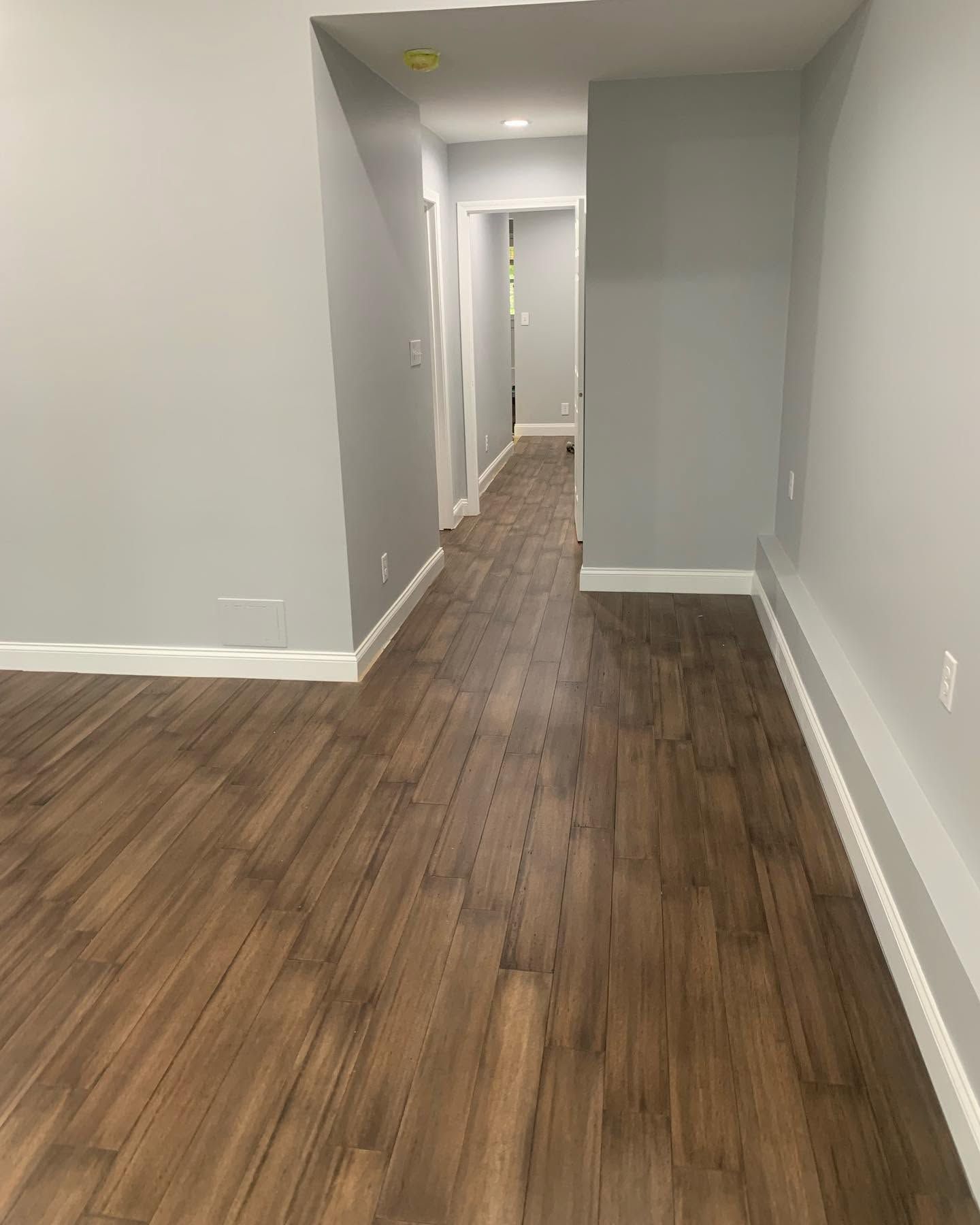
After installation, you walk on floors that maintain consistent gaps between planks through seasonal humidity shifts rather than opening wide gaps in winter or buckling in summer. The wood veneer shows authentic grain patterns and natural color variation identical to solid hardwood, while the engineered construction underneath prevents the warping that occurs when moisture penetrates from below. Seams remain tight, and the floor stays level without developing dips where boards cup upward at edges.
Engineered hardwood works well over concrete slabs where solid hardwood risks moisture damage, and in rooms with radiant floor heating where temperature changes would cause solid wood to crack. Installation does not include removing existing flooring or repairing structural subfloor damage beyond surface leveling.
Common Questions About This Service
Clients often need clarification on engineered hardwood characteristics and installation requirements before purchasing.
What makes engineered hardwood more stable than solid wood?
The plywood core uses layers with grain running perpendicular to adjacent layers, preventing the uniform expansion that occurs when all grain runs the same direction in solid planks. This cross-grain construction limits movement to fractions of what solid wood experiences.
How many times can engineered hardwood be refinished?
Veneer thickness determines refinishing potential. Thicker veneers allow multiple sandings, while thin veneers permit only one or two refinishing cycles before sanding reaches the plywood core.
When should engineered hardwood be chosen over solid?
Below-grade installations, concrete subfloors, and areas with humidity fluctuations exceeding ten percent seasonally benefit from engineered construction. Solid hardwood performs better where humidity stays consistent and subfloors provide traditional joist construction.
Why does acclimation matter for engineered products?
Even though engineered hardwood resists movement better than solid wood, the veneer layer still contains moisture that needs to stabilize at indoor levels. Installing before acclimation causes minor expansion or contraction that stresses joints.
What underlayment works best under engineered hardwood in Charlotte?
Moisture barriers prevent ground moisture from reaching the planks in crawlspace installations, while foam underlayment reduces sound and cushions minor subfloor imperfections. Charlotte's climate requires vapor barriers in most below-grade or slab installations.
JB Roza Flooring discusses engineered hardwood options that match your home's humidity patterns and subfloor construction. Schedule a consultation to review veneer thicknesses, finish options, and installation methods for your specific rooms.