
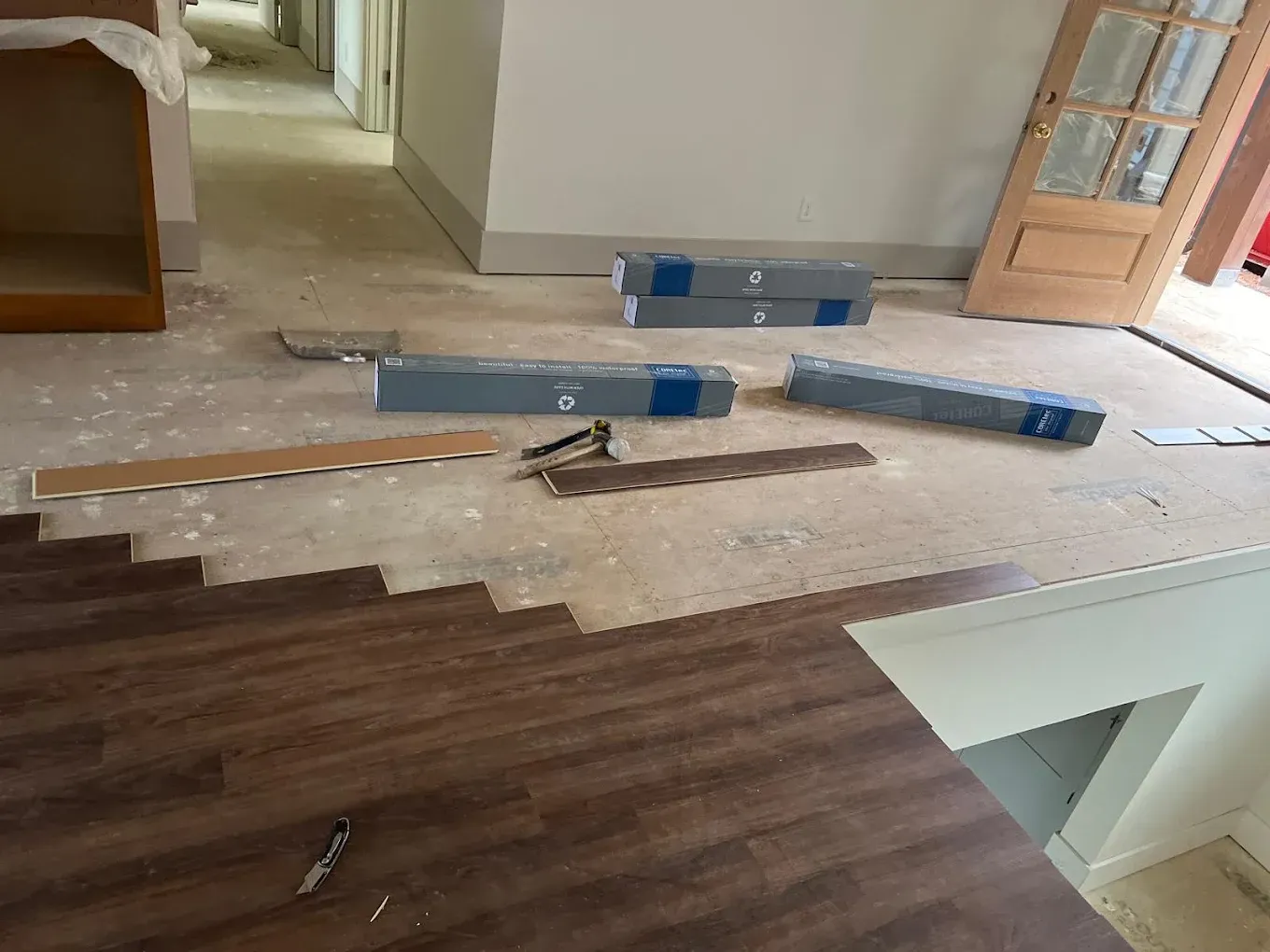
Floors Ready to Be Updated Completely
Flooring Removal and Replacement in Charlotte for homes where current floors are worn beyond repair or outdated
Floors that show deep scratches, permanent stains, or surface damage that cannot be sanded out reach a point where replacement makes more sense than continued repair attempts. Removing worn flooring reveals what's underneath and allows inspection of the subfloor before new material is installed. JB Roza Flooring handles removal carefully to protect surrounding walls and baseboards, then installs replacement flooring selected to improve both durability and appearance over what was there before.
Flooring removal involves lifting material without damaging the subfloor beneath it, which requires different techniques depending on whether the original floor was glued, nailed, or floated. Once the old floor is out, the subfloor is inspected for moisture damage, rot, or structural issues that need to be addressed before new flooring is installed, because installing over compromised subflooring shortens the lifespan of the replacement material.
Arrange an on-site evaluation to review your current flooring and discuss replacement options.
How Replacement Addresses Long-Term Flooring Issues
After the existing floor is removed, the subfloor is checked for levelness, stability, and moisture resistance. Any areas that feel soft, show discoloration from water exposure, or have height variation beyond acceptable tolerances are corrected before replacement flooring is installed. This step eliminates the underlying causes of premature flooring failure that often go unnoticed when new material is installed over problem areas.
You'll notice that new flooring sits flat without high spots or dips, and the surface feels solid underfoot without movement or squeaking. Rooms look updated, and the difference between worn, scratched floors and freshly installed material changes how the entire space feels visually and functionally.
Replacement flooring is selected based on how the room is used, what the subfloor can support, and what appearance you're working toward. Installation includes ensuring that transitions between rooms are level and that new flooring integrates cleanly with areas that weren't replaced, avoiding abrupt height differences or visible seams.
Answers to Frequent Replacement Questions
Property owners typically ask about the removal process, what happens to the subfloor, and how long the project takes from start to finish.
What happens to the old flooring after removal?
Material is hauled away as part of the service, and disposal methods depend on whether the flooring contains materials that require specific handling or can be processed as standard construction waste.
How is the subfloor inspected?
The surface is checked for moisture levels using a meter, visually inspected for damage, and tested for levelness with a straightedge to identify areas that need correction.
Can some rooms be replaced while others are left as-is?
Replacement can be limited to specific areas, and transitions are installed where new flooring meets existing floors to create a clean boundary that doesn't look unfinished.
Why does subfloor condition matter for flooring longevity?
Flooring installed over uneven or moisture-damaged subflooring develops gaps, squeaks, and premature wear because the material isn't supported evenly and movement accelerates deterioration.
How soon can new flooring be installed after removal?
Installation begins once the subfloor is inspected and any necessary repairs are completed, which in most Charlotte homes happens within the same project timeline unless significant subfloor work is required.
JB Roza Flooring inspects what's underneath your current floors and installs replacement material that addresses both appearance and durability. Schedule a flooring replacement estimate to review material options and project timing.