
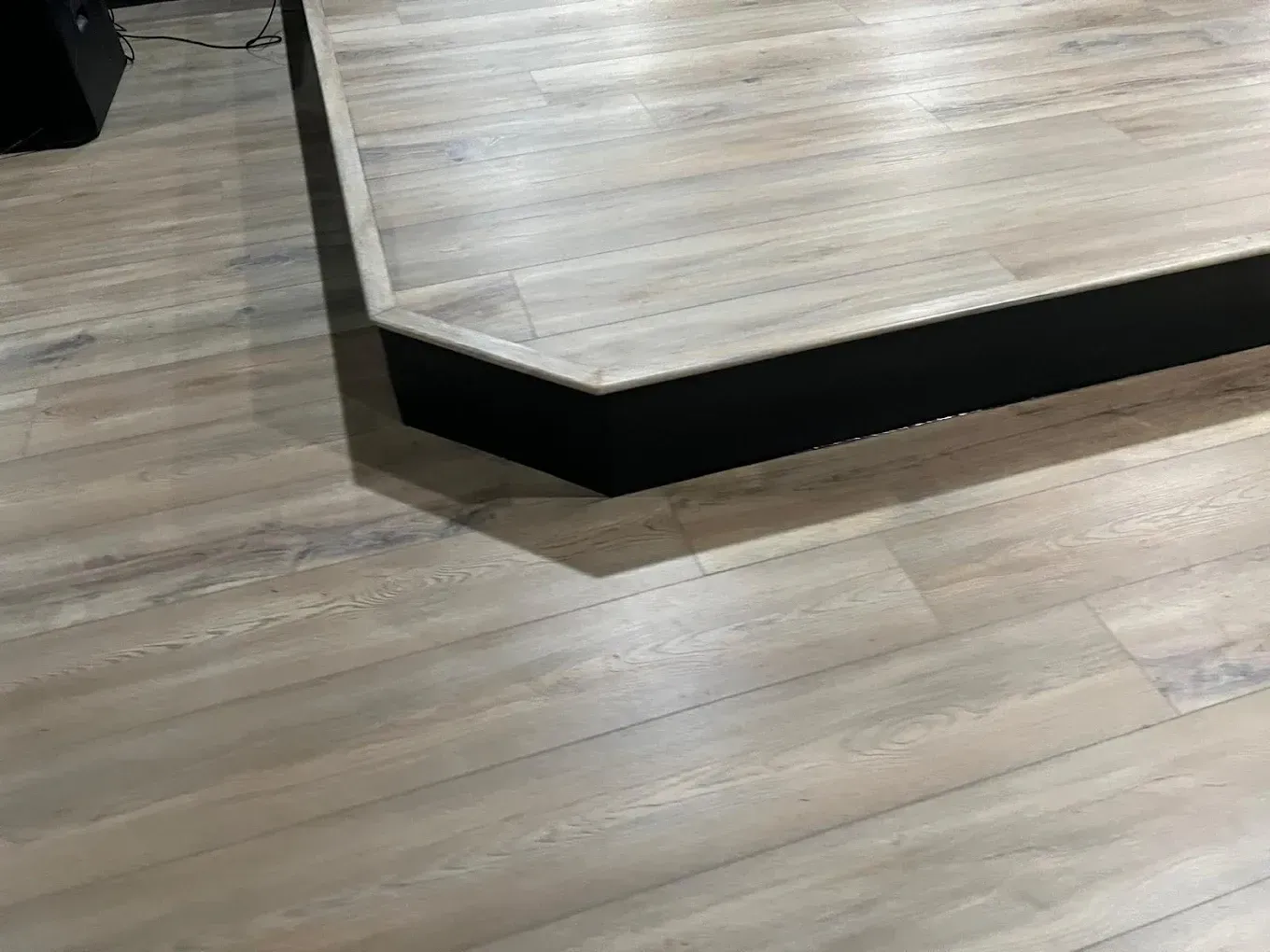
Restoring Wood Without Replacing Boards
Hardwood Floor Refinishing in Charlotte for floors showing scratches, dull finish, or worn traffic patterns
Surface damage accumulates on hardwood as furniture scrapes finish off high-contact areas, grit tracked from outdoors abrades protective coatings, and ultraviolet light oxidizes finishes near windows into cloudy, discolored patches. JB Roza Flooring removes these damaged layers through controlled sanding that exposes fresh wood underneath, then applies new finish coats that restore the floor's protective barrier and visual clarity. You see floors where scratches disappear, where traffic lanes no longer show as darker paths through rooms, and where light reflects evenly across surfaces without hazy spots.
The refinishing process begins with coarse-grit sanding to level surface irregularities and remove old finish, progresses through finer grits that smooth wood fibers, and concludes with finish application that seals the wood against moisture and daily wear. Staining occurs between sanding and finish coats when you want to change the wood's color or deepen its natural tone.
Schedule a hardwood floor refinishing consultation to assess your floor's thickness and discuss finish options that fit your household activity.
Why Refinishing Works for Worn Floors
Sanding removes enough material to eliminate scratches penetrating below the finish into the wood itself, typically between one-sixteenth and one-eighth inch depending on damage depth. You decide whether to keep the existing wood color or apply stain that darkens the surface, and you choose finish types ranging from oil-based polyurethane that provides thick protective layers to water-based products that dry faster with less odor. Proper sanding sequences prevent cross-grain scratches that show through finish coats as visible lines.
Once refinishing completes, the floor displays wood grain clearly without the cloudiness that develops as old finish deteriorates, and surfaces feel smooth when you walk barefoot without catching on rough patches. The new finish resists water penetration that causes dark spots when spills sit too long, and it handles abrasion from foot traffic without dulling immediately. Floors maintain their appearance longer because the fresh finish has not yet been compromised by years of micro-scratches that diffuse light reflection.
Refinishing extends floor life by decades compared to replacement costs, preserving the character of older wood that shows tighter grain patterns than many modern options. The service does not include filling large gaps between boards, replacing damaged planks, or addressing subfloor structural issues that cause floors to flex excessively.
Questions Before Starting Your Project
Property owners considering refinishing typically want to understand what the process involves and what results to expect.
What determines whether a floor can be refinished?
Remaining wood thickness above the tongue-and-groove joint determines refinishing feasibility. Floors sanded too many times previously lack material for additional sanding without weakening board structure or exposing fasteners.
How long does refinish cure before furniture returns?
Water-based finishes allow light foot traffic within hours and furniture placement after one day, while oil-based polyurethane requires several days to harden enough for normal use. Full cure takes weeks, during which the finish continues hardening.
When should floors be refinished rather than replaced?
Floors with surface damage but sound underlying wood and intact board structure benefit from refinishing. Replacement becomes necessary when boards are cracked, subfloors have failed, or moisture damage has penetrated deep into the wood.
Why do some refinished floors show sanding marks?
Skipping intermediate sanding grits or using worn sandpaper leaves scratches that appear as lines running perpendicular to the wood grain after finish is applied. Proper technique requires progressive grit sequences that remove marks from previous passes.
What stain options work best in Charlotte homes?
Stain choice depends on desired color and how the wood species accepts pigment. Oak absorbs stain evenly, while maple shows blotchiness without pre-treatment. Charlotte's natural light conditions affect how stain colors appear throughout the day as sun angles change.
JB Roza Flooring evaluates your floor's condition and explains whether refinishing or board replacement provides better long-term value. Contact us at (980) 267-5853 to review your floor's refinishing potential and discuss finish types that match your maintenance preferences.